…und andere Beiträge zur feministischen Kunst- und Kulturgeschichte
|
Das Gewerbe – Frohberg 1896 |
Die Neuzeit-Simm 1882 |
Electricité Poulain o.J. |
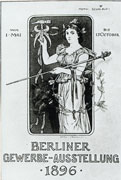
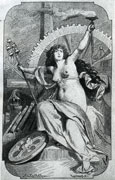
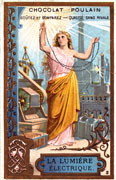
Berufsverbot für die Musen. Warum sind so viele Allegorien weiblich?
erschienen in: “Ästhetik und Kommunikation”, Nr. 25/1976, S. 92-112
Ein “Pionier-Text” für die Geschlechterperspektive in der deutschsprachigen Kunstgeschichte – ebenso wie “Honoré Daumier und das Häßliche Geschlecht”.
Vorspann: aus dem Text:
“Seit der Antike werden in der bildenden Kunst abstrakte philosophische Begriffe, ewige Wahrheiten und menschliche Eigenschaften als lebende und handelnde Wesen vorgestellt, in Allegorien personifiziert: Gerechtigkeit und Weisheit, Tugend und Laster, Kunst und Natur, Jahreszeiten und Erdteile…
Sollen nun Begriffe in Menschenform verbildlicht werden, muß man sich notwendig auch für das eine oder andere Geschlecht entscheiden. Diese Entscheidung ist unverhältnismäßig oft für das weibliche Geschlecht gefallen. Unverhältnismäßig deshalb, weil frau sich doch fragen muß, in welchem Verhältnis die reale Bedeutung der Frau im Patriarchat zu ihrer überragenden Rolle in der Allegorie steht; wieso sie angesichts ihrer gesellschaftlichen Ohnmacht fast alles in der Welt befindliche, alle geistigen und materiellen Werte, alle Erscheinungen des Lebens über Jahrtausende in der Kunst verkörpern können soll?
Diese Fragestellung ist neu in der Kunstwissenschaft. Bisher hat man sich vorzugsweise um die Existenzberechtigung dieser Kunstgattung gestritten…”
aus: C.R., Berufsverbot für die Musen, in: “Ästhetik und Kommunikation”, Nr. 25/1976, S. 93.
Langfassung siehe unten; diese kürzere Fassung weiterlesen: berufsverbot_musenKurz92-112 (4,9 MB)
Ubersetzungen
Niederländisch in: “Kunstwerk”, Zeitschrift am Kunsthistorischen Institut der Universität Nijmegen/Niederlande, Nr. 15/1979
Schwedisch in: “Kvinnovetenskapling Tidskrift”, Lund/Schweden, Nr. 4/1981, siehe > other languages
Abbildungen aus dem Kapitel “Fleisch und Eisen” – Allegorien auf die Maschine, die die Männer verschlingt:
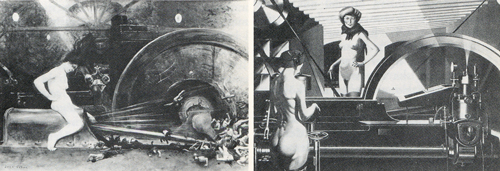
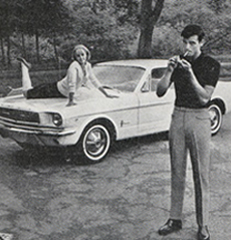
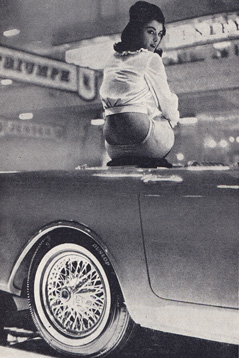
Veber, “Allegorie auf die Maschine, die die Männer verschlingt”, um 1900; rechts: Scholz, “Fleisch und Eisen”, 1923. Darunter: Werbung ca. 1965



Berufsverbot für die Musen (Langfassung)
Eine Langfassung des Artikels „Berufsverbot für die Musen“ ist veröffentlicht in: „Frauen und Wissenschaft. Beiträge zur Berliner Sommeruniversität für Frauen, Juli 1976“ Berlin 1977 , S. 258-297
Volltext als PDF: Rentmeister Berufsverb. Musen LangFass
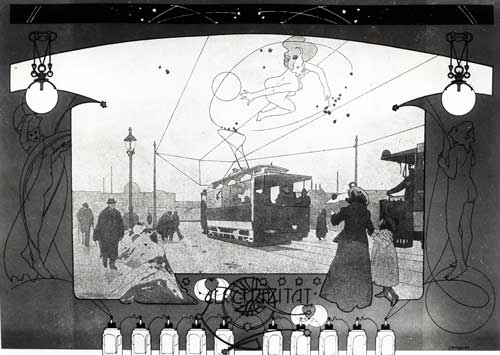
G.v. Kempf: “Elektrizität”, Berlin 1900
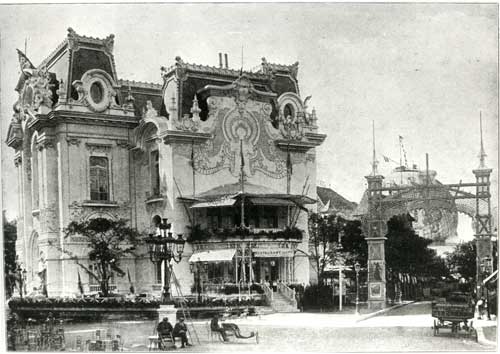
“Frauenpalast” Weltausstellung Paris 1900

Allegorie “Die Arbeit”, Abb.1 aus “Berufsverbot für die Musen” aus Ausstell.Katalog “100 Jahre Arbeit”, Prag 1891 (Schwedisches Plakat, 1981)
Blick zurück im Zorn – die Geschichte des Ö.
in: Gabriele Dietze (Hrsg.), “Die Überwindung der Sprachlosigkeit”, Darmstadt (Luchterhand) 1979 und 1989
Übersetzungen:
niederländisch in: Sonderheft von “De Heilstaat”, Zeitschrift des Kunsthistorischen Instituts der Universität Amsterdam, Dez. 1979, im Volletxt als PDF, – siehe > other translations… oder gleich hier als PDF
englisch (USA) in: “Feminist Studies”, University of Maryland/USA. Sonderausgabe zur Kulturgeschichte der Frauen, Winter 1980
Volltext – deutsch, mit Illustrationen – als PDF: > unter Menüpunkt “Ödipus und das Sphinx Rätsel”
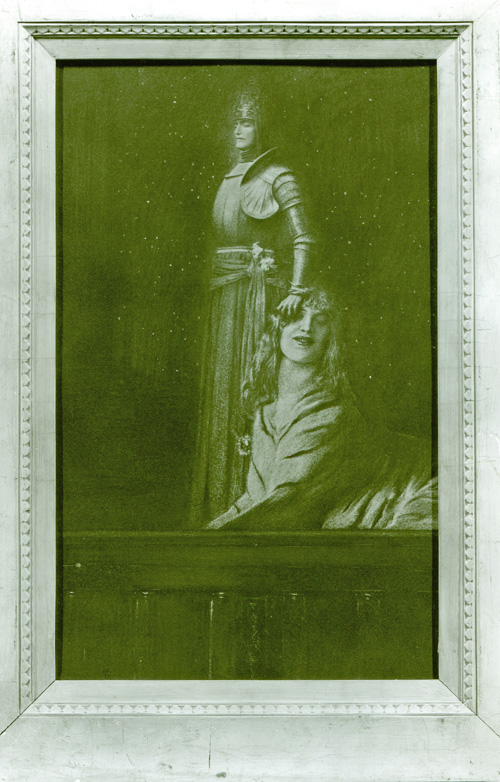
Das Rätsel der Sphinx – Matriarchatsthesen und die Archäologie des nicht-ödipalen Dreiecks
in: Brigitte Wartmann (Hrsg.) (1980): “Männlich – Weiblich”. Berlin (Ästhetik und Kommunikation)
Volltext als PDF: > unter Menüpunkt “Ödipus und das Sphinx Rätsel”
Matriarchale Weltbilder in Alt-Europa, im Spiegel der Symbolkultur –
und: Die Archäologie als “Wissenschaft der Unterwelt” und ihr Beitrag zur matriarchalen Ikonografie
mehr dazu lesen in Menü: > Frauenwelten – Männerwelten. Kap. 2.2, S.67-108 (dort Volltext als PDF)